Buying guides
Published 2026-10-01 · Last reviewed 2026-10-01
Level 1 or Level 2? How to Choose a Portable EV Charger in 2026
A portable EV charger is the cable-and-box unit you plug into a wall outlet and then into the car. It is the simplest way to charge at home, and it is the one piece of charging gear you can take with you. Before you pick one, three questions decide almost everything: how fast you need to charge, which outlet you have, and which connector your car takes.
The short answer
| Level 1 | Level 2 | |
|---|---|---|
| Outlet | Ordinary 120-volt household outlet | 240-volt outlet (208 volts in many commercial buildings) |
| Range added per hour | About 5 miles | About 25 miles |
| Overnight (8 hours) | About 40 miles | Enough to recharge a typical EV battery |
| Electrical work | None if the outlet is sound | A 240-volt outlet and circuit, installed by an electrician |
The figures are the U.S. Department of Energy's typical values; your car and charger can be faster or slower.
Level 1: often enough
Level 1 charges from a standard 120-volt outlet. The cord has an ordinary household plug at one end (the Department of Energy gives the three-prong NEMA 5-15 as the example) and the car connector at the other. The Department's Alternative Fuels Data Center puts it at about 5 miles of range per hour of charging, and says 8 hours at 120 volts can replenish about 40 miles.
That makes the question simple: if the miles you drive on a normal day are comfortably under what one night adds, Level 1 may be all you need. If you regularly drive more than that, or you want to recover from a long day overnight, Level 2 is the step up.
Level 2: the overnight full charge
Level 2 runs on 240 volts in homes. The Alternative Fuels Data Center gives about 25 miles of range per hour of charging, enough to charge a typical EV battery overnight, and notes that most residential Level 2 chargers operate at up to 30 amps, delivering 7.2 kW.
A portable Level 2 charger plugs into a 240-volt outlet rather than being wired to the wall. That means you still need the outlet, and the outlet needs a circuit that can carry the load.
The circuit has to be bigger than the charger
The U.S. National Electrical Code treats EV charging as a continuous load. As EC&M explains in its guide to the Code's Article 625, overcurrent protection for circuits supplying EV charging equipment must be rated at not less than 125% of the maximum load.
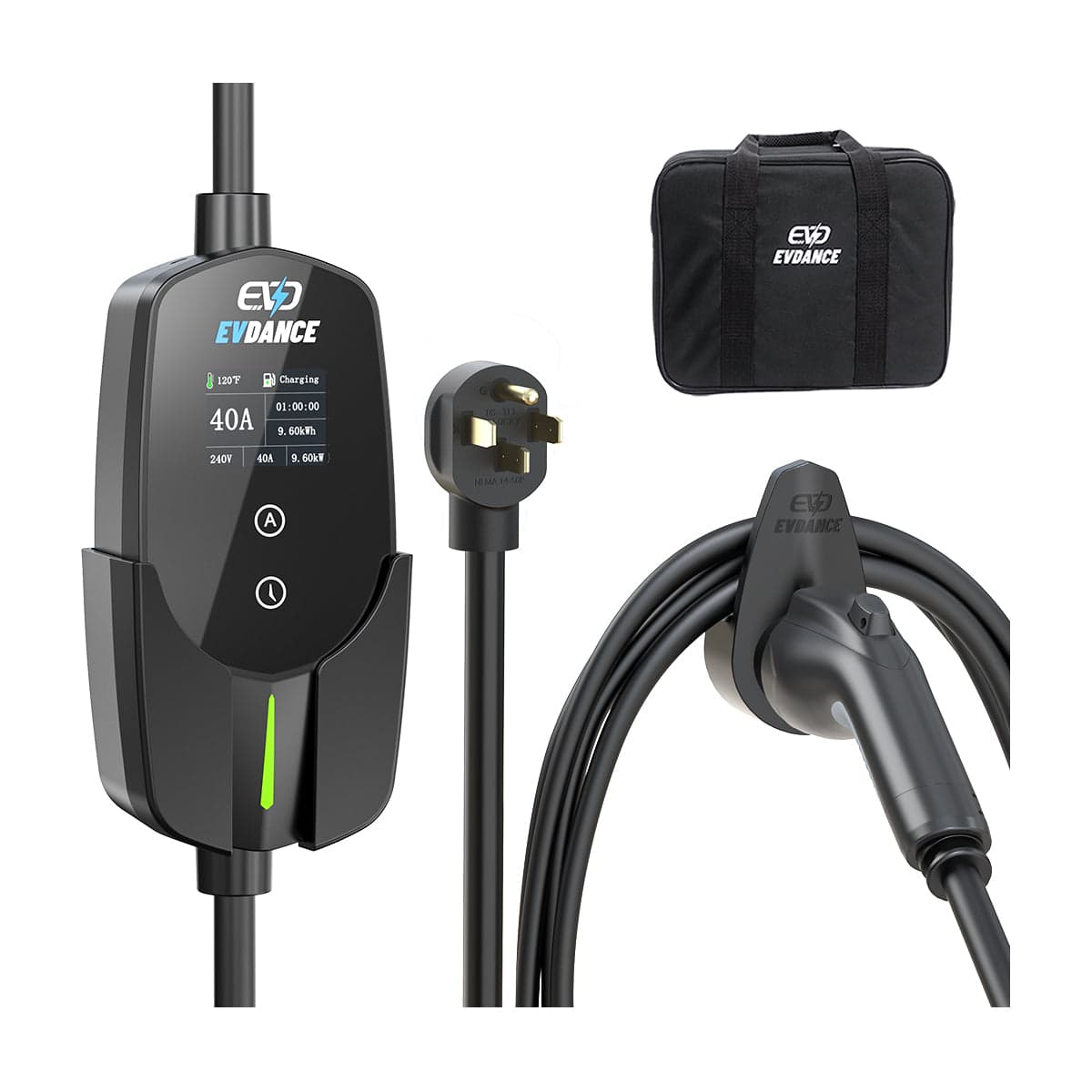
In practice: a charger that draws 40 amps needs a circuit protected at 50 amps or more (40 × 1.25 = 50). Check the amps your outlet's circuit is rated for, and choose a charger whose current setting fits inside it.
Match the plug and the connector
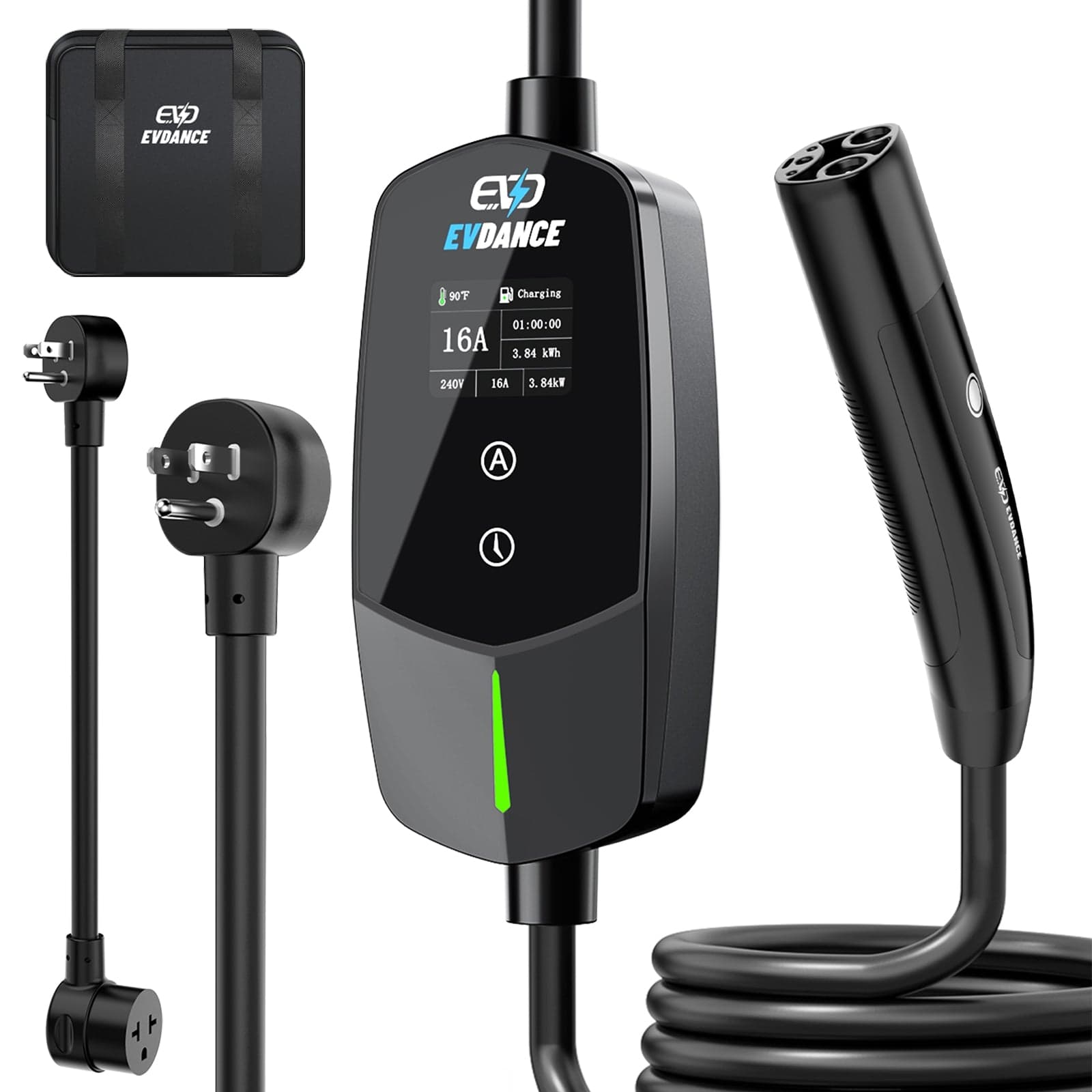
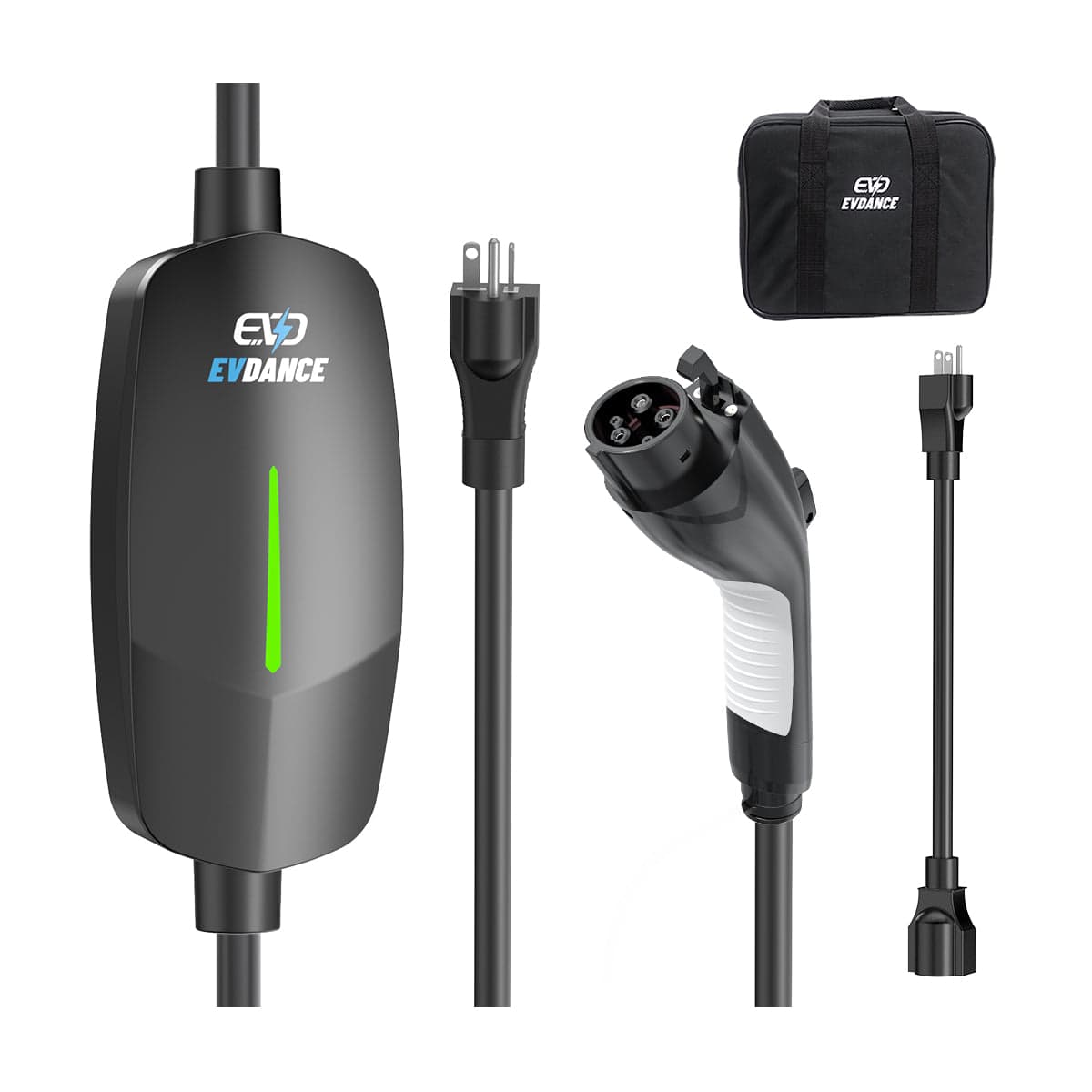
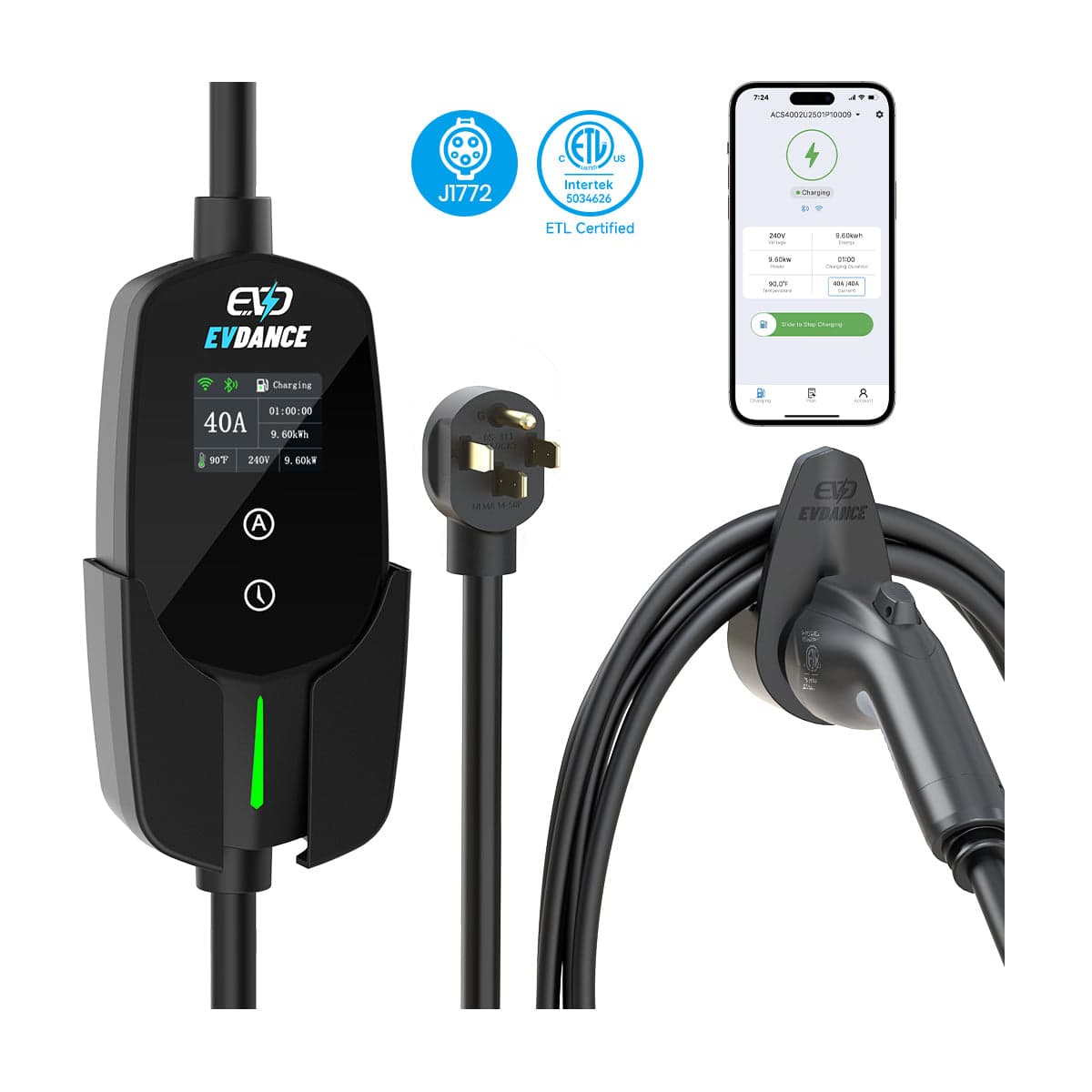
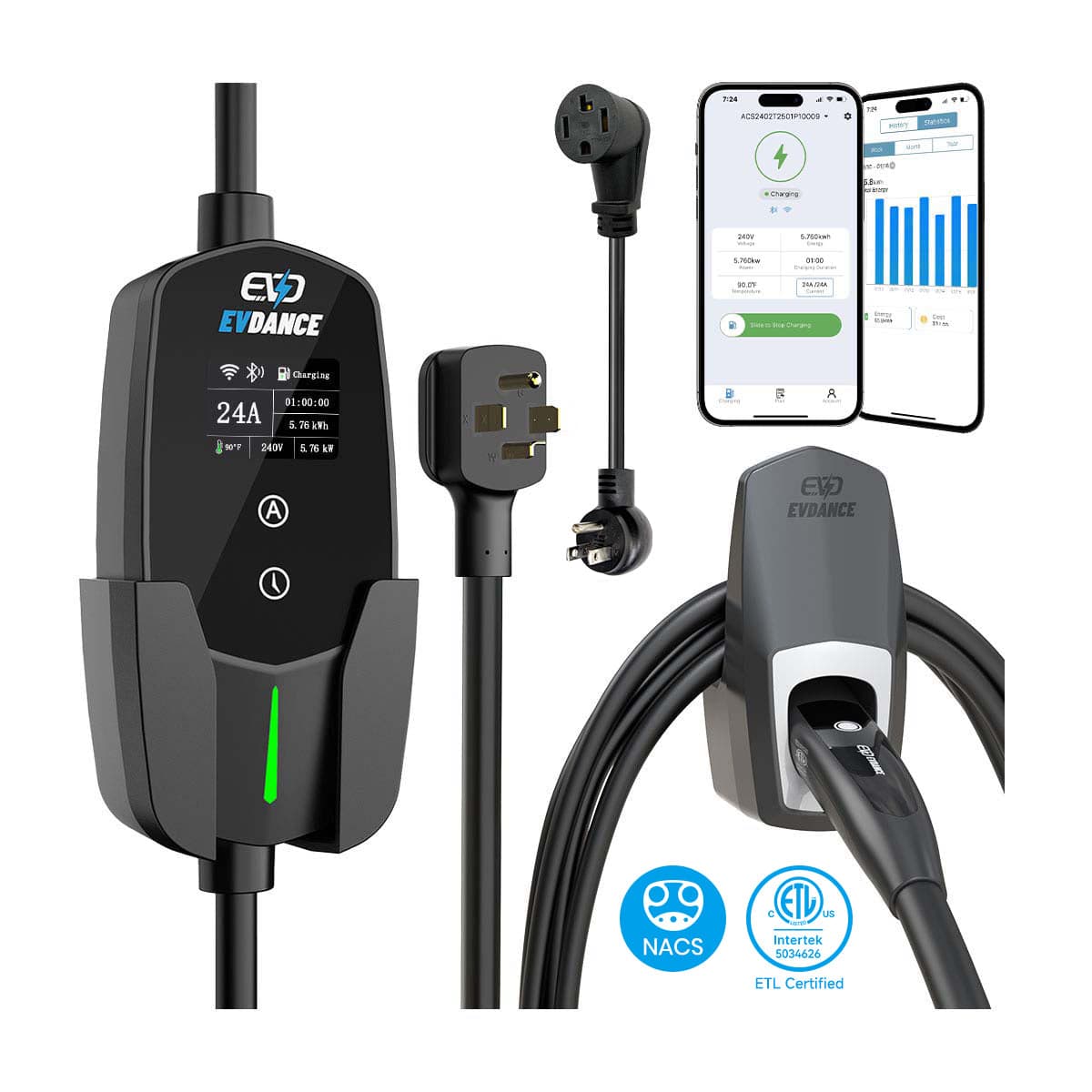
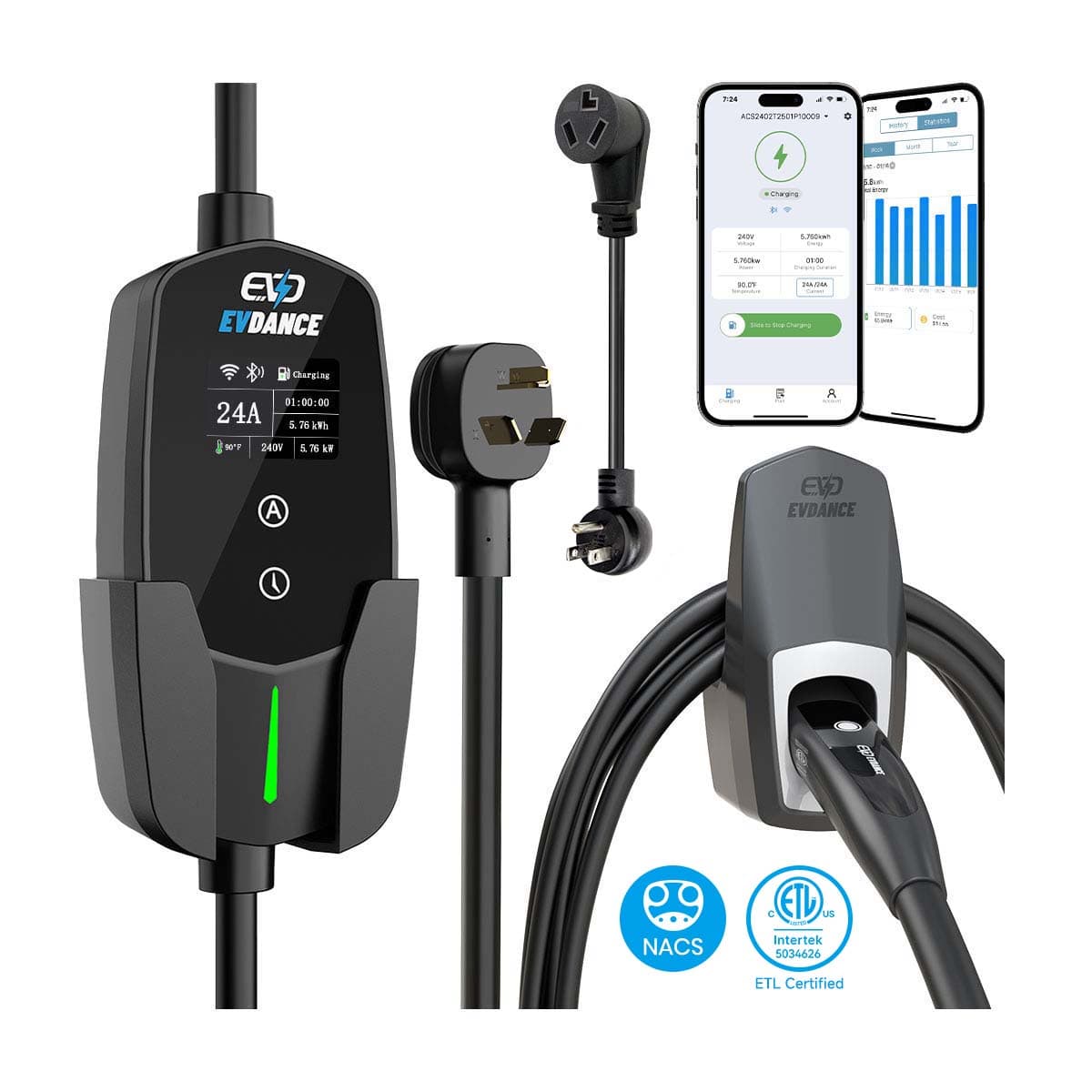
The plug is the end that goes into the wall. A portable Level 2 charger is sold with a specific 240-volt plug, and it only fits the matching outlet. Our listings carry the plug type in the product name where the store provides it, so compare it with the outlet you have.
The connector is the end that goes into the car. North America has two:
- J1772 (SAE J1772), the connector the Alternative Fuels Data Center describes on standard Level 1 and Level 2 equipment.
- J3400, better known as NACS (North American Charging Standard). Rivian says all of its newly built vehicles from model year 2026 have a native NACS port, and Electrek reported in August 2026 that every 2027 GM EV from Chevrolet, Cadillac and GMC will come with one.
Buy the connector your car's port takes. If your car and the charger don't match, an adapter can bridge them: Rivian tells owners to use a Rivian-approved adapter to reach CCS1 or J1772 chargers, and Electrek reported that GM sells a J1772 adapter for its NACS cars, as of October 2026.
Safety, briefly
The National Fire Protection Association's home-charging tip sheet gives three rules that apply to every home charger:
- "Do not use extension cords with the charger."
- "Use devices that are listed by a qualified testing laboratory." Product listings often name the certification.
- Have a qualified electrician check that your electrical system can handle charging, and install a new circuit just for the charging device.
The bottom line
- Short daily drives: Level 1 on a household outlet may cover them, at about 5 miles of range per hour.
- Longer daily drives, or you want a full battery each morning: Level 2, at about 25 miles per hour, on a 240-volt outlet.
- Size the circuit at 125% of the charger's current, match the plug to the outlet and the connector to the car, and look for a testing-laboratory listing.
Sources
- U.S. Department of Energy, Alternative Fuels Data Center, Electric Vehicle Charging Stations — Level 1: 120 V, NEMA 5-15 plug example, about 5 miles per hour, about 40 miles in 8 hours; Level 2: 240 V residential / 208 V commercial, about 25 miles per hour, overnight charge of a typical battery, most residential units up to 30 A at 7.2 kW; the SAE J1772 connector. Accessed 2026-10-01.
- EC&M, Harold De Loach, The Apprentice's Guide to Article 625, 2023-11-09 — EV charging loads are continuous loads; overcurrent protection not less than 125% of the maximum load. Accessed 2026-10-01.
- Rivian, What is NACS? — NACS standardized as J3400; native NACS port on newly manufactured vehicles from model year 2026; "To access CCS1 or J1772 chargers, use the appropriate Rivian-approved adapter." Accessed 2026-10-01.
- Electrek, Every 2027 GM EV will plug directly into Tesla Superchargers, 2026-08-14 — every 2027 Chevrolet, Cadillac and GMC EV with a native NACS port; GM sells a J1772 adapter, needed for most existing Level 2 chargers. Accessed 2026-10-01.
- National Fire Protection Association, Electric Vehicles: Safe Charging at Home (tip sheet, 2024, as published by the City of Bloomington, Minnesota) — "Do not use extension cords with the charger."; "Use devices that are listed by a qualified testing laboratory."; a qualified electrician to check the system and install a new circuit just for the charging device. Accessed 2026-10-01.